
Shifts in the field lead the charge
Civil contractor workflows reveal how infrastructure systems evolve before institutions formally recognize the shift

Reading Time: 3-minute read
created By: HW&Co insights Team
Published: May 2026

INSIDE THIS INSIGHT
Field Adaptation Happens First
Construction Workflows Become Infrastructure Signals
Operational Complexity Reaches the Field
Infrastructure Execution Becomes More Measurable
Infrastructure systems rarely change all at once.
Operational shifts often emerge gradually through field adaptation long before institutions formally recognize them.
Contractors change workflows. Crews adopt new tools. Material systems evolve. Layout methods improve. Coordination becomes more complex. Visibility requirements increase.
The field adapts first.
That makes contractor behavior and construction workflows surprisingly valuable infrastructure signals.
Field Adaptation Happens First
Most infrastructure evolution begins operationally before it becomes institutional.
Field crews encounter constraints first:
aging infrastructure
labor shortages
site variability
operational complexity
environmental restrictions
tighter tolerances
coordination pressure
The response is usually practical adaptation.
New tools appear. Workflow shortcuts emerge. Measurement systems enter the field. Contractors standardize processes informally. Operational efficiencies become necessary instead of optional.
That operational adaptation often reveals where broader infrastructure systems are heading.
Construction Workflows Become Infrastructure Signals
Field workflows increasingly reflect broader infrastructure pressures.
That includes:
tighter grading tolerances
more complex drainage coordination
measurement-driven layout
environmental defensibility
material tracking
documentation expectations
infrastructure verification
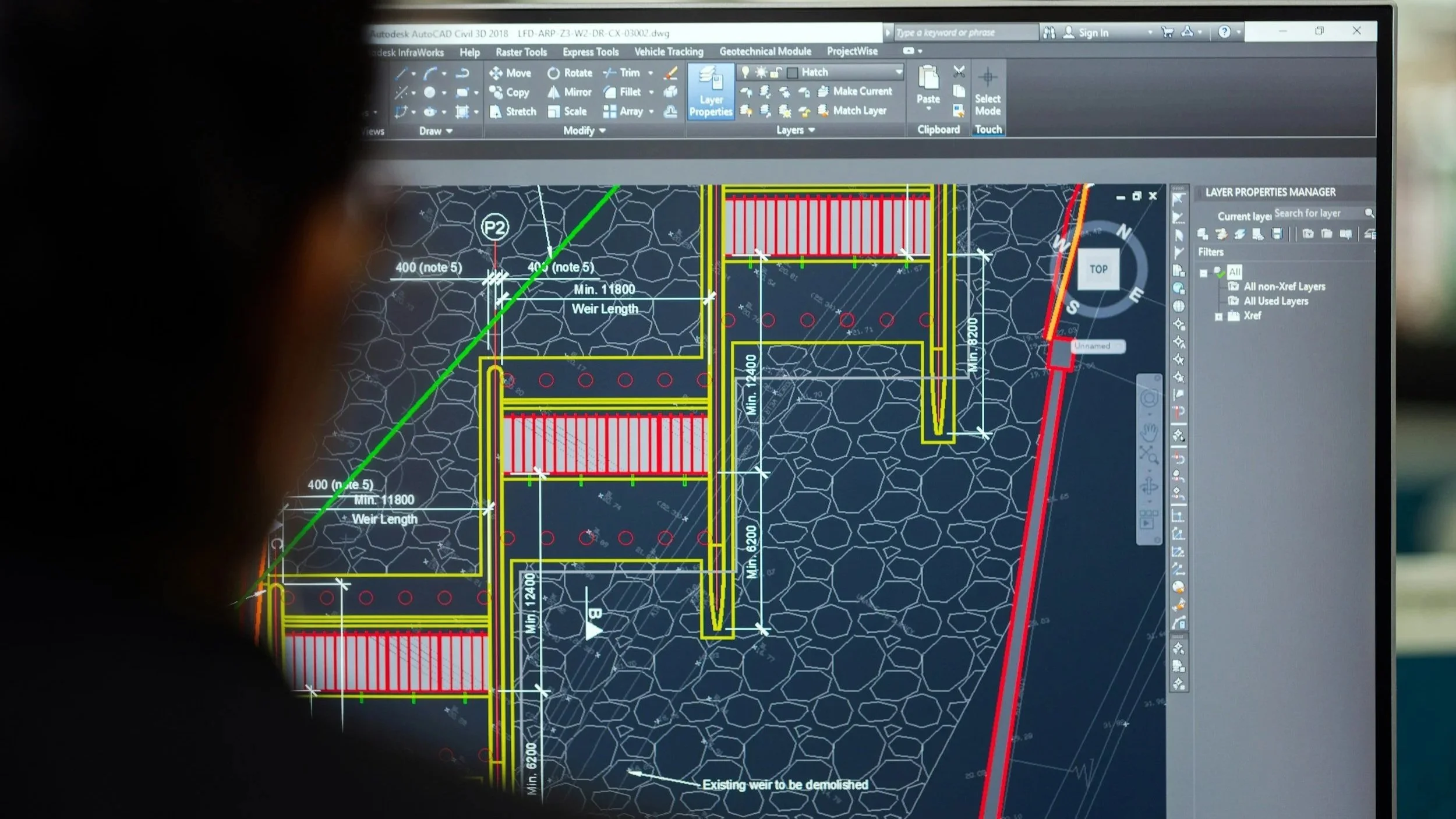
Technologies that once appeared limited to engineering or surveying environments increasingly move directly into field operations.
The gap between planning systems and field execution is narrowing operationally.
That shift matters because infrastructure performance is ultimately determined in the field, not in diagrams.

Operational Complexity Reaches the Field
Operational complexity is no longer isolated inside large infrastructure organizations.
It increasingly reaches directly into:
contractor coordination
site execution
layout verification
drainage integration
terrain adaptation
materials handling
environmental compliance
That changes expectations for field execution itself.
Crews increasingly operate inside systems requiring greater visibility, defensibility, and operational precision than many traditional construction environments historically demanded.
Field execution becomes more measurable.
And eventually, more accountable.
Infrastructure Execution Becomes More Measurable
The long-term implication is larger than contractor technology adoption.
Infrastructure execution itself is becoming increasingly measurable.
That includes:
material placement
grading precision
infrastructure verification
operational timing
documentation quality
environmental exposure
field coordination
The organizations that adapt best will likely not be those chasing the newest tools constantly.
They will be the organizations capable of integrating operational understanding into field execution consistently and practically.
The field is gradually becoming one of the clearest places to observe where infrastructure systems are evolving next.



Featured Insights
-
![Image Alt Text]()
From Infrastructure Maintenance routines to Repeatable Process Accountability
Civil infrastructure systems are increasingly expected to explain not only what was done, but how effectively it performed.
-
![]()
Point Cloud Is Changing How Operators Understand Physical Systems
Reality capture technologies are changing how infrastructure is inspected, understood, and managed operationally.
-
![]()
Stockpile Measurement best practices are Becoming an Operational Requirement
Handling bulk materials as measurable operational systems rather than static inventory stockpiles
-
![]()
Rules of The Game: Operational Intelligence Systems Within Public Works Departments
Municipal operators expect to balance speed, accountability, environmental exposure, and operational coordination simultaneously